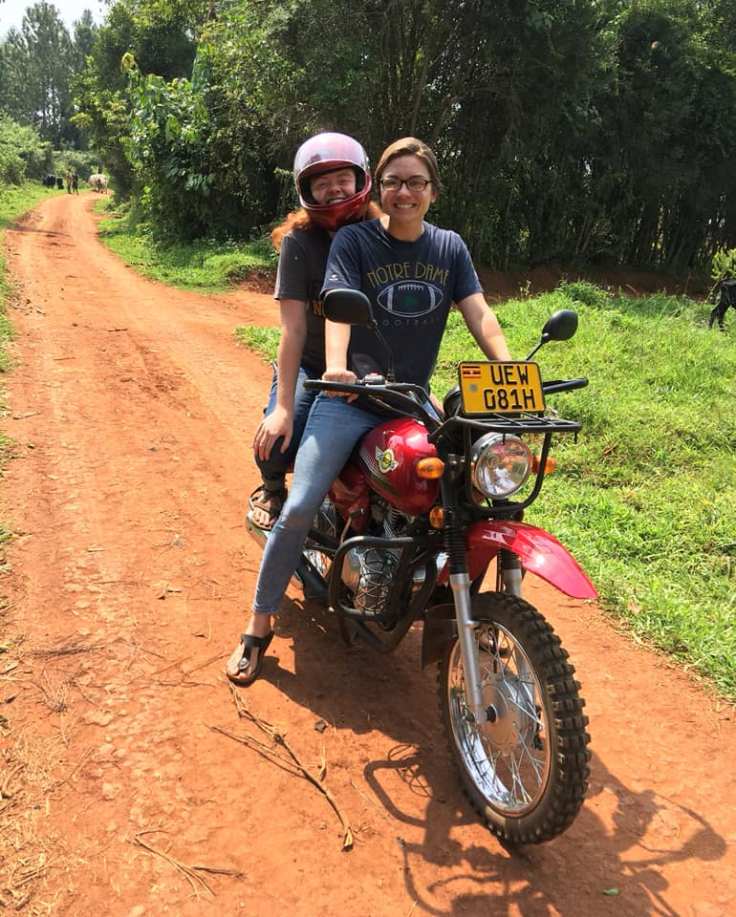
This is Katie Robben, founder and executive director of Let Us Move Mountains (LUMM). She has become a fast dear friend! Katie founded LUMM in 2018. She has been a friend of Holy Cross since her arrival to Kyarusozi parish in September 2016, and I was so grateful to be connected with her as a role model and friend. After spending two wonderful weeks in Kyarusozi (a rural village in western Uganda), I wanted to share some of her goodness and that of the LUMM team.
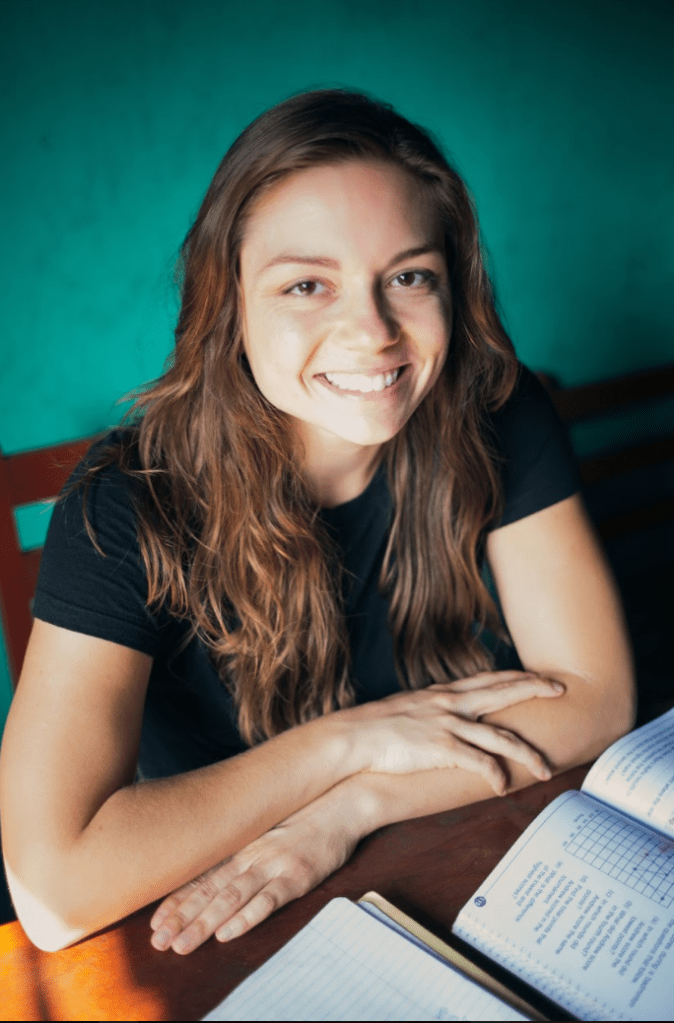
I featured the other team members of LUMM in a previous post here. In short, LUMM (Let Us Move Mountains) is a non-profit organization which partners with local Ugandan organizations to improve education, agriculture, and employment. For more information about LUMM you can go here to their website: https://letusmovemountains.org/. I hope you appreciate this story on LUMM’s inspirational founder.
Why did you decide to start Let Us Move Mountains?
I originally moved here to be a teacher at the local primary school. The deputy head teacher had started an association for children living with HIV called Young Positives Empowered to Adhere (YPEA). She asked me if I wanted to be a part of it. She told me about what they do and why they started. I thought it was a really great cause and so I joined her in that.
We would do a lot of visitations to the kids’ homes. She would do a lot of counseling and make sure they were on medication. We helped the families start kitchen gardens, and all these things were coming from her own pocket and just donations here and there which people would give me to use here for ministry. Then we hit a point where I thought, I’m going to have to walk away from this and move back to the States and leave this behind. Or I start a non-profit association which can help fund this association. And that’s what I decided to do.
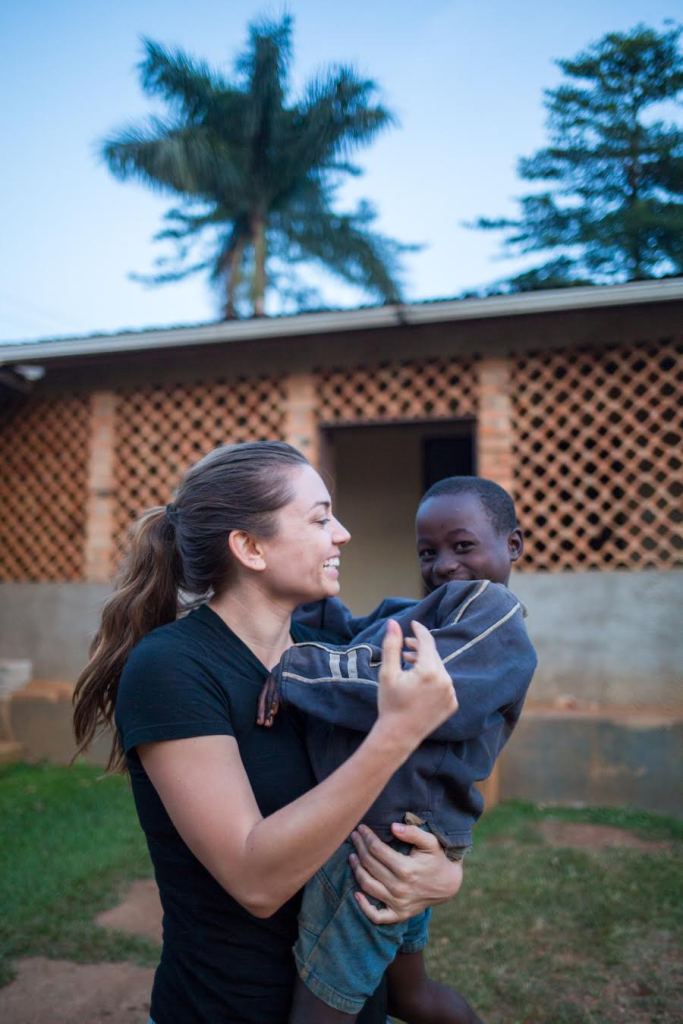
I felt like the connections I made here weren’t something I could just walk away from. Some of these kids – I didn’t just not want to know how their story goes. To walk away and not even to know what’s going on in their lives, after spending a year and a half getting to know them — that was really heavy on my heart. So that was a big part of why I decided to start Let Us Move Mountains.
For about a year and a half, Florence and I were doing YPEA on our own. And it felt like a lot of work for two people to be doing on our own. It was hard for us to balance the structure and the strategy of it and actually the field work. So I started praying to God. I’m like, God, I need you to send us people to help us in this mission. Especially when I discerned that I needed to start LUMM, I was like really praying for Him to bring people. It doesn’t bother me, they can Ugandan, they can be international volunteers, I don’t know – we just need people.
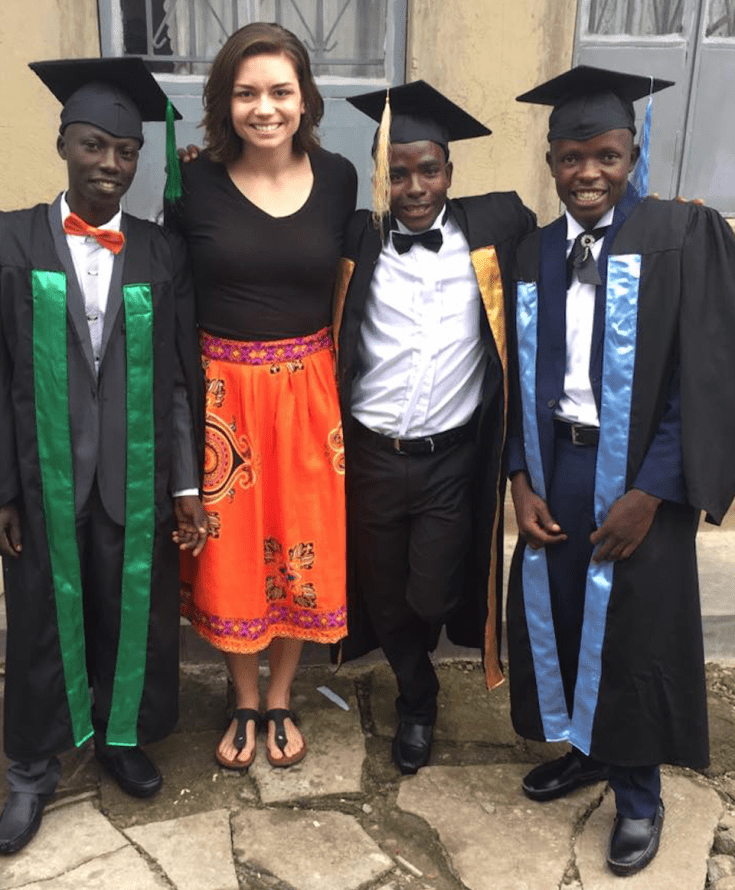
At some point, it was like an “Aha!” moment. Almost like, I know God would never say this directly, but he was like, “Duh Katie, you already know people. Buka, Emma, Ezra, and Olive were all graduates of St. Joseph’s Hill Secondary School [run by the Congregation of Holy Cross]. I met them when I volunteered here for ten weeks in 2015. And we kept in touch. When we knew I was moving back, a priest asked me if we could find an unofficial sponsorship for their university. So I was actually finding donors for them before LUMM.
Before I asked them to join, I asked “What are your majors?” One was in Accounting, one was in Business Administration, one was in Administration, and one in Agriculture. And that was like everything we needed! I think it’s really cool that they work for us in exchange for sponsorship for school. People we sponsor turn into actually employees. It’s a neat circle.
I asked the team if they could assist Florence for the three months that I was back in the US doing the non-profit paperwork, getting a board together, and finding donations. They jumped in right away, and it was a slow start because they hadn’t really known what was going on before I asked them to join. So just sitting and discussing what the actual mission was, and what I was doing on the US side, took some time. But they did a really great job.
So how did I choose? I really didn’t. I feel like God really just brought them in. Olive has since then moved to Kampala for another job, which was a really great thing for her. Now it’s the four of us.
What would you say are some of the best qualities or characteristics of LUMM?
At the most basic level, it comes down to the people who work for LUMM. I think that everybody involved really has their eyes and hearts set on Jesus and what he really wants us to be doing with this mission and ministry. Because of that, it really keeps us focused on the smaller and simpler things. Not trying to be this huge organization.
Not that I don’t like organizations that sponsor thousands of kids, or sometimes you see statistics that say we’ve started hundreds of savings groups throughout this country. And to me, I think that’s good, but do you know the people involved in that? How are you monitoring what’s going on in those specific groups when there are eight hundred of them? It just seems like a lot to manage. Because our team is small and the service we do is smaller, we’re able to do more thorough work and get to know people to the point that we truly do care about them.
Then, the Ugandans on the team have the same background and story as a lot of the people who we serve. I think that’s huge. For myself to come on these home visits and try to motivate people, I don’t know that it is very fruitful because there’s such a gap in the background of our stories. But for Buka, Emma, Ezra, Olive, and Florence, they’re from the villages that we serve in. And even when we expand outside these villages they’re pretty similar, so there’s a deeper understanding of the people we are serving.
That’s the biggest thing, all in the individuals who make [LUMM] up. Because everything stems from that. The fact that we partner with organizations which already exist, not starting new things in new places. That’s been a vision of our team collectively because of who we are. It’s a separate thing, but also tied to who is involved in the team and decision-making. It’s a lot of listening to what the community needs and responding from there, rather than deciding what they need.
Tell me about one of your best days in Uganda.
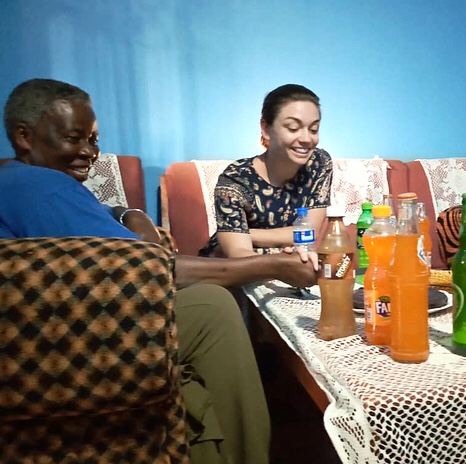
I really just have a general idea. My favorite days at work were when we would start out on the farm and have a really productive morning at the farm. Then we go visit homes in the afternoon. So we were outside together all day, just moving around to the different homes and visiting with people. Especially when the kids are home, that’s really nice.
When I came back to the Church, it changed my perspective on work as a whole. When you truly enjoy the work that you do, and you do it for the Lord and with Him, you’re not always looking forward to the great days and the best days. Sometimes the best days are just your normal, because you enjoy what you’re doing. For me that’s how it is now. There’s not a lot of looking forward to specific things because I really enjoy the general work that we’re doing.
How have you grown closer to God through your time in Uganda?
Part of this could be that I’ve grown and matured since I came, over these years. In the US and as a teacher, I did rely on God, but not as much as here. I think I had a clearer direction when I was teaching. I thought my life was going to go a certain way. Since I’ve been here there hasn’t been a super clear direction for my personal life. And for that reason alone, I have had to trust God totally. So I think that would be the biggest spiritual thing personally, just putting my future in his hands.
Also patience at the same time. You think that you’re going to be at a certain point at a certain age. Then that age comes and you haven’t reached it. So just being patient, believing that God is going to introduce things when He wants to, when He believes it’s time for you.
God had put it on my heart when I was 20, and I wasn’t back to the Church yet. A young woman came into school and talked about teaching in South Africa for four weeks. Something sparked in my heart. Obviously it was God but I wasn’t thinking about God at all in my mind; I was just like, oh that sounds really cool. So I started looking for opportunities to teach overseas, but the opportunity never opened up until after I came back to the Church.
I think that’s just proof that God had that door closed because I was not ready for it yet. It would have been a totally different experience then, because I wasn’t focused on what the Lord wanted. It was all about what I wanted. So coming back to the Church really opened up a way for me to serve the Lord and also live out that desire to serve overseas.
What is one thing you think Ugandans should know about the US?
For me, I think– I don’t know that it’s the US, but for the world in general – that everyone struggles or suffers, and we carry burdens of one way or another. From the outside it might not look like people are suffering or struggling with something, but they are.
It goes both ways. People in the US have a specific world view about Uganda, and Ugandans have a specific world view about the United States, that everything is very prosperous and there’s wealth and opportunity. Yes, those are true, but when it comes down to the human person, it’s the same. And so just keeping that in mind.
From both sides, we lump people together as a collective culture. That is a barrier to seeing someone as an actual human being, a child of God who has their own specific joys, suffering, and heartache, you know? I would tell them something like that.
 Joy in Jinja
Leave a comment